
Mary, Mother of God: Understanding One of the Most Misunderstood Titles of Our Blessed Mother
Knowing Mary: The Meaning Behind Her Titles
How can Mary be the Mother of God if God existed before Mary was ever born?
This is a question many Christians ask, particularly those who are not Catholic. Some are genuinely puzzled by the title Mother of God, while others believe that calling Mary by this name places her above God or suggests that she somehow created Him.
These concerns deserve a thoughtful and respectful response.
The Catholic Church does not teach that Mary created God, that she existed before God, or that she is the source of His divinity.
In fact, the title Mother of God is not primarily about Mary’s greatness. It is about the identity of her Son, Jesus Christ.
And once we understand who Jesus truly is, the reason the Church calls Mary the Mother of God becomes much clearer.
Let Us Begin with Sacred Scripture
When the Archangel Gabriel appeared to Mary at the Annunciation, he told her:
“The Holy Spirit will come upon you, and the power of the Most High will overshadow you. Therefore the child to be born will be called holy, the Son of God.” (Luke 1:35)
Notice what the angel said.
The child Mary would conceive and bear was not merely a holy man, a prophet, or someone who would eventually become the Son of God.
He was the Son of God.
Saint John’s Gospel takes us even deeper into this mystery:
“In the beginning was the Word, and the Word was with God, and the Word was God.” (John 1:1)
Then, a few verses later, John declares:
“And the Word became flesh and made his dwelling among us.” (John 1:14)
Here is the foundation of everything we believe about Jesus Christ.
The eternal Word, who is God, became human.
He did not cease to be God when He became man. Nor did He merely appear to be human. He truly took on our human nature, with all that this means, except sin.
And the woman through whom the eternal Son of God entered our world as a human being was Mary.
Elizabeth Called Mary the Mother of Her Lord
There is another beautiful passage in Scripture that helps us understand this title.
After the Annunciation, Mary visited her relative Elizabeth, who was expecting John the Baptist.
Filled with the Holy Spirit, Elizabeth exclaimed:
“And how does this happen to me, that the mother of my Lord should come to me?” (Luke 1:43)
Consider those words carefully.
“The mother of my Lord.”
Elizabeth recognised something extraordinary about the child Mary was carrying.
In the context of Luke’s Gospel, where Jesus is identified as the divine Son of God, Elizabeth’s Spirit-inspired greeting supports the Church’s understanding of Mary’s divine motherhood.
She was not simply carrying an ordinary child who would later receive a special religious mission.
She was carrying Jesus Christ, the eternal Son of God made flesh.
And Saint Paul reinforces this truth when he writes:
“But when the fullness of time had come, God sent his Son, born of a woman…” (Galatians 4:4)
God sent His Son.
And that Son was born of a woman.
That woman was Mary.
But Did Mary Give Birth to God’s Divinity?
This is where we must make an essential distinction.
Mary did not give Jesus His divine nature.
Jesus is the eternal Son of the Father. As God, He has no beginning. He existed before Mary, before Abraham, before the creation of the world.
Mary was herself created by God and redeemed through the saving work of Jesus Christ.
What Mary gave to Jesus, through the power of the Holy Spirit, was His human nature.
But here is the important point: Mothers give birth to persons, not merely to natures.
When a mother gives birth to a child, we do not say she is the mother of only the child’s body. She is the mother of the person who was born.
And who is the Person Mary conceived and gave birth to?
Jesus Christ.
Who is Jesus Christ?
The eternal Son of God, the Second Person of the Blessed Trinity, who became truly human without ceasing to be truly divine.
Therefore, Mary is rightly called the Mother of God.
Not because she is the origin of God, but because the Person to whom she gave birth is God the Son.
This is the heart of the teaching.
Why Did the Early Church Defend This Title?
Some people assume that the Catholic Church invented the title Mother of God many centuries after Jesus lived.
But the title has deep roots in early Christianity.
Christians used the Greek word Theotokos, meaning God-bearer or the one who gave birth to God, to describe Mary.
The title became particularly important during theological controversies about the identity of Jesus Christ.
In the fifth century, a major dispute arose over how the divine and human realities of Christ should be understood. Nestorius, the Patriarch of Constantinople, objected to the use of Theotokos and favoured the title Christotokos, meaning Mother of Christ.
The concern was not simply about what to call Mary. It involved how to express the unity of Jesus Christ.
At the Council of Ephesus in AD 431, the Church solemnly affirmed Mary’s title as Theotokos.
Why?
Because Jesus Christ is not two separate persons, one human and one divine.
He is one divine Person, the eternal Son of God, who possesses both a divine nature and a human nature.
The Council’s teaching protected this fundamental truth about the Incarnation.
Later, the Council of Chalcedon in AD 451 further clarified that Jesus Christ is one Person in two natures, truly God and truly man, without confusion or separation.
So when the Church defended the title Mother of God, she was defending the truth about Jesus.
To understand why Mary is called Mother of God, we must first understand that Jesus is God.
Does Calling Mary Mother of God Make Her Equal to God?
Absolutely not.
The Catholic Church teaches that Mary is a creature, entirely dependent upon God for her existence and salvation.
She is not divine.
She is not a fourth person of the Blessed Trinity.
She is not the source of the Father’s existence or the origin of the Holy Spirit.
She is the Mother of Jesus Christ according to His humanity, and Jesus Christ is truly God.
Mary’s dignity comes entirely from God’s gracious choice and from her unique relationship with His Son.
In her Magnificat, Mary herself declares:
“My soul proclaims the greatness of the Lord.” (Luke 1:46)
Notice that Mary does not glorify herself.
She glorifies God.
And that is exactly what authentic Catholic devotion to Mary should do.
Why Does This Matter to Christians Today?
At first glance, this might seem like a theological question belonging to ancient Church councils.
But the truth it protects is central to our salvation.
If Jesus were merely a remarkable human being, then His birth in Bethlehem would be the birth of an extraordinary religious teacher.
But Jesus is infinitely more than that.
In Jesus Christ, God Himself entered our human history.
The One whom Mary carried in her womb is the One through whom all things were created (John 1:3).
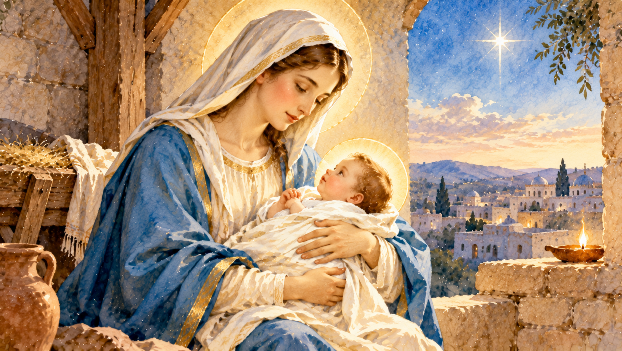
The Child she held in her arms is the eternal Son of the Father.
The One she cared for in Nazareth is the One who would heal the sick, forgive sins, raise the dead, and offer His life for our salvation.
And the One she watched suffer on Calvary is the same divine Son who rose triumphantly from the dead.
This is why the Incarnation is so extraordinary.
God did not remain distant from human suffering.
He entered our world.
He experienced hunger, tiredness, sorrow, rejection, and pain.
He became one of us, without ceasing to be God, so that we might share in His divine life.
And Mary was chosen to participate in this extraordinary mystery as His Mother.
What Can We Learn from Mary, the Mother of God?
Mary’s title reminds us not only of the truth about Jesus but also of the beauty of responding to God’s call.
When Gabriel announced God’s plan, Mary did not understand everything that lay ahead.
She could not have known every joy, sacrifice, sorrow, and responsibility that awaited her.
Yet she responded:
“May it be done to me according to your word.” (Luke 1:38)
Her willingness to cooperate with God’s grace opened the way for the Incarnation.
And this challenges us to examine our own response to God.
Do we trust Him when His plans are different from ours?
Do we welcome Jesus into our daily lives, or do we confine Him to Sunday worship?
Do we allow His presence to shape how we treat our families, neighbours, colleagues, and even those who have hurt us?
Mary carried Jesus physically in her womb. We are called to carry His presence spiritually into the world through faith, love, and obedience.
We do this when we forgive, when we serve, when we defend the dignity of others, and when we live according to His Gospel.
Mother of God: A Title That Leads Us to Jesus
The next time we pray the Hail Mary and say, “Holy Mary, Mother of God, pray for us sinners,” perhaps we can reflect more deeply on what those words proclaim.
We are not saying that Mary is greater than God.
We are not saying that she created the divine Son.
We are professing our faith that Jesus Christ, born of the Virgin Mary, is truly God and truly man.
That is why this title is so important.
And perhaps it offers a beautiful opportunity for Catholics and other Christians to begin a respectful conversation, not by arguing about Mary, but by opening Sacred Scripture together and asking:
Who is Jesus Christ?
Because once we understand who He is, we can better understand why His Mother holds such a special place in the history of salvation.
Mary, Mother of God, is a title that ultimately proclaims the glory of her Son.
And her greatest desire is that we should know Him, love Him, and follow Him.
Let Us Pray
Blessed Virgin Mary, Mother of God, you were chosen by the Father to become the Mother of His eternal Son, Jesus Christ.
Through your humble acceptance of God’s will, you welcomed into our world the Saviour of all humanity.
Help us to deepen our faith in Jesus, truly God and truly man.
Teach us to trust God as you trusted Him, to surrender our lives to His will, and to welcome His presence into our hearts and homes.
Pray especially for those who struggle to understand the mysteries of our faith. May we always speak the truth with patience, humility, and love.
And may your example lead us ever closer to your Son, Jesus Christ, our Lord and our God.
Holy Mary, Mother of God, pray for us. Amen.
Fully Catholic — Sharing the Joy of the Faith