
Scottish bishops say ‘prayer moved hearts’ after Scottish Parliament rejects assisted suicide
In a final vote, members of Scottish Parliament (MSPs) have rejected a bill that would have made assisted suicide legal — a dramatic turn of events that Scotland’s Catholic bishops are attributing to the power of prayer.
Reacting to the result immediately after its announcement on March 17, Scotland’s bishops told EWTN News: “Prayer is what moved hearts on this important issue. We are over the moon. Glory be to God that life has triumphed tonight!”
Bill sponsor Liam McArthur and his supporters were confident of the Assisted Dying for Terminally Ill Adults (Scotland) Bill becoming law. In the first vote in May 2025, Parliament voted 70 to 56 in favor of the bill progressing to Stage 2. The bill was then amended at Stage 2 before moving to Stage 3 for a decisive vote. in the end, however, MSPs rejected it, voting 69 to 57 against the bill.
After an emotional debate, 12 MSPs changed sides, moving from supporting the Bill at Stage 1 to opposing it. Notable MSPs who swapped sides included Jamie Hepburn (Scottish National Party), Daniel Johnson (Labour), and Brian Whittle (Conservative), who publicly announced their decisions during the debate.
This followed other notable announcements in the buildup to the vote by Scottish Conservative leader Russell Findlay and Scottish National Party MSPs Audrey Nicoll and Collette Stevenson, who had initially supported the bill and then shared their decisions to vote against it.
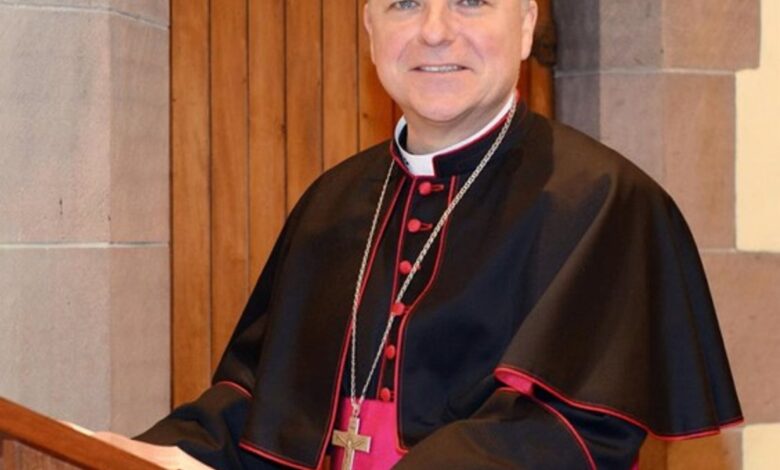
Commending MSPs for voting against the legislation, Bishop John Keenan, president of the Bishops’ Conference of Scotland, said after the vote: “I would like to express my gratitude to all MSPs for their serious engagement with this issue and for the thoughtful and considered attention they have given to the bill. I am especially grateful to those who upheld the principle of human dignity and advocated on behalf of the vulnerable.”
The Catholic Church teaches that assisted suicide is inherently immoral. In advance of the final vote, Keenan commented that a vote against the bill would “protect some of Scotland’s most vulnerable individuals from the risk of being pressured into a premature death.”
“Every human life possesses inherent value,” he said. “Genuine compassion is not expressed through ending a life but through accompanying those who suffer and ensuring they receive the medical, emotional, and spiritual support that recognizes their dignity.”

Pro-life groups opposing the bill also highlighted the importance of the vote for the vulnerable. In a message to EWTN News, Alisdair Hungerford-Morgan, chief executive of pro-life charity Right To Life UK, called the result “a great and deeply significant victory for the most vulnerable people in Scotland.”
Hungerford-Morgan told EWTN News: “People nearing the end of their lives, no matter what their condition, need love and support, not a pathway to suicide, which is exactly what the Scottish assisted suicide bill would have done."
The vote followed an intense and long debate over five sessions, culminating in the final debate and vote on March 17.
Hungerford-Morgan said: “If this bill had passed in the Scottish Parliament and gone on to become law, it would have ushered in an irrevocable change that would have put the vulnerable at risk and seen the ending of thousands of lives through assisted suicide in Scotland.”
He added: “After two years of debate, and the most intense scrutiny that the question of assisted suicide has ever received in Scotland, Holyrood, which is widely regarded as one of the world’s most socially and politically progressive legislatures, has come to the conclusion that introducing assisted suicide is unsafe and dangerous.”
Paul Atkin, pro-life officer at the Archdiocese of St. Andrews and Edinburgh, highlighted “the strength of engagement across our archdiocese” due to the fact that, from the 12 MSPs who changed their votes to opposing the bill, eight represent constituencies within the Archdiocese of St. Andrews and Edinburgh.
Atkin told EWTN News: “The defeat of this bill is a welcome result, reflecting the strength of engagement across our archdiocese. From the archbishop’s leadership to parishes who organized hundreds of letters, this was a united effort which made the difference.”
Praising the “remarkable contribution” of the archdiocese, Atkin paid tribute to the “polite, persistent engagement from the Catholic community,” which helped “shape outcomes and protect the most vulnerable.”
Opponents of the bill called for attention to now move away from assisted suicide toward investment in palliative care. “Our next priority must be to strengthen palliative care by ensuring that it is properly funded and accessible to all who require it,” Keenan said.
Echoing this viewpoint, Hungerford-Morgan urged MSPs to “unite to focus on renewed efforts to promote and improve palliative care.”
Following the defeat of the bill, Hungerford-Morgan turned his attention to a separate bill currently being debated in the House of Lords in London that would legalize assisted suicide in England and Wales, initiated by Labour MP Kim Leadbeater.
Calling on the Leadbeater Bill’s sponsors to “reject assisted suicide,” he said: “This victory will have an impact far beyond Holyrood as the Leadbeater Bill is being debated in the House of Lords. Instead of pushing ahead with this dangerous bill, its sponsors should follow Scotland’s example and reject assisted suicide.”