
15,000 faithful and pope’s representative commemorate centenary of 4 Mexican martyrs
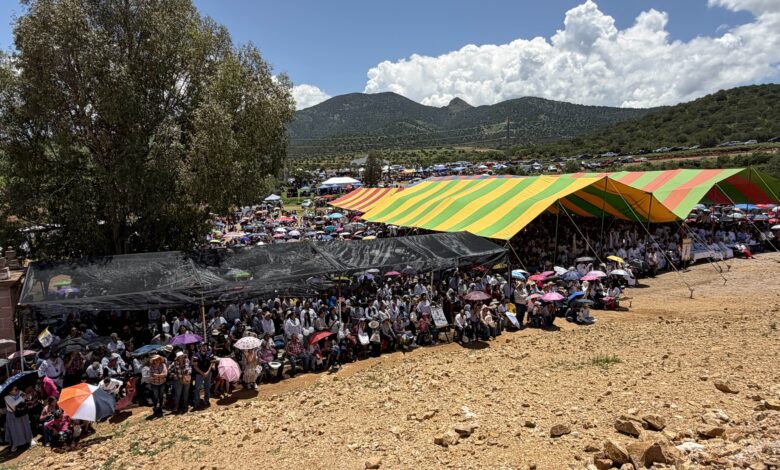
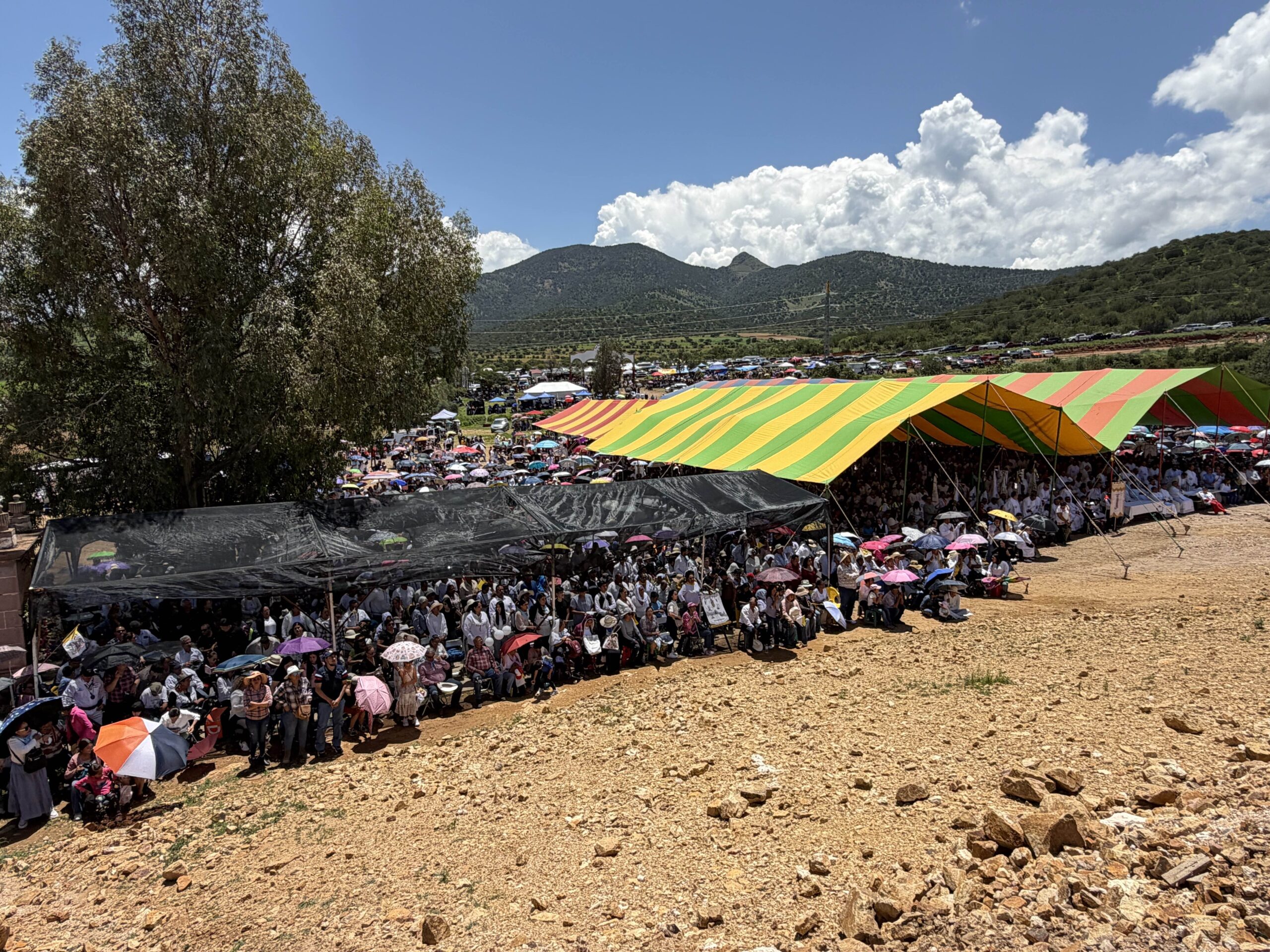
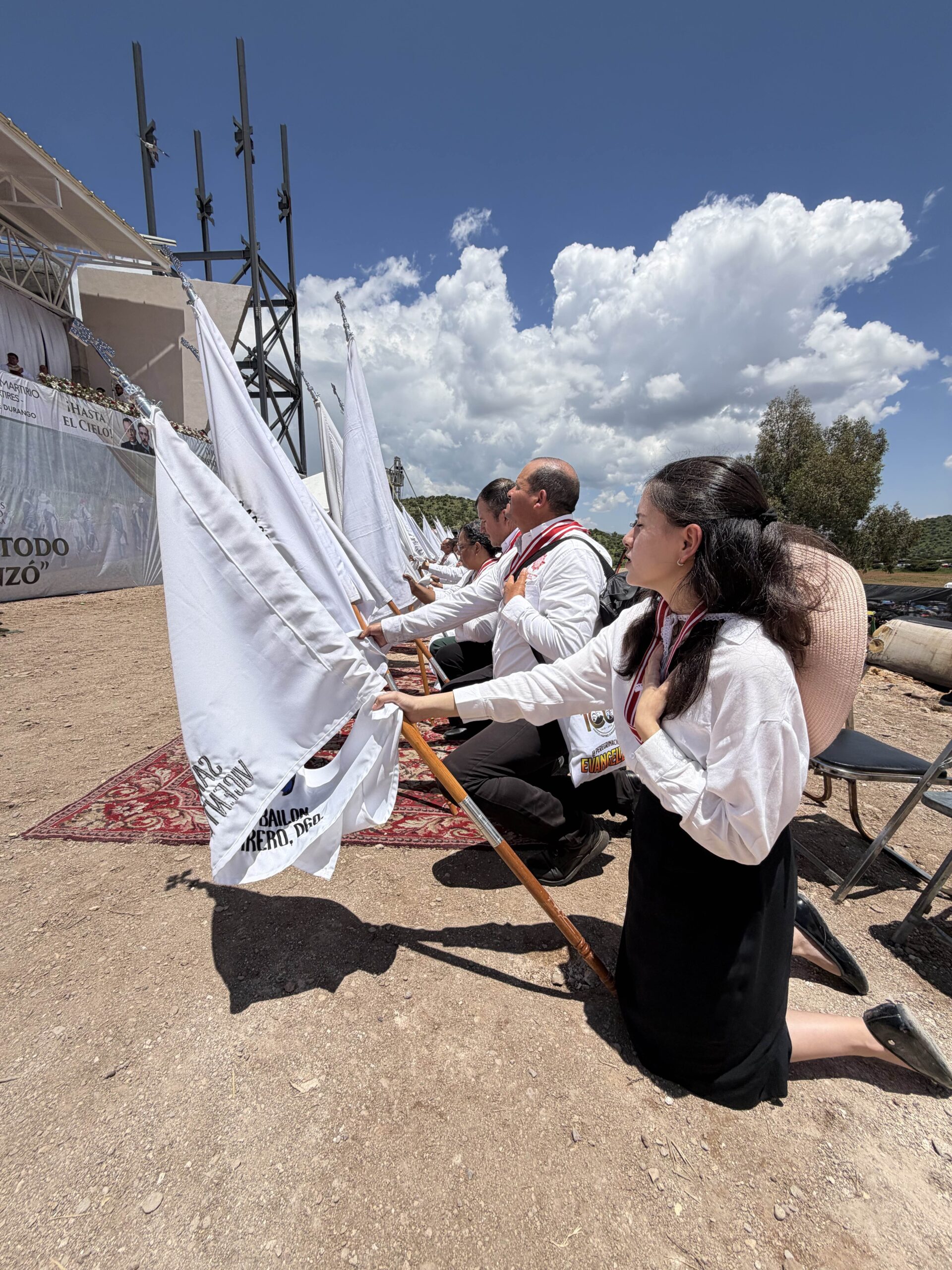
Around 15,000 faithful gathered on Saturday, Aug. 15, at the Holy Places of Chalchihuites in the Mexican state of Zacatecas to commemorate the centenary of four martyrs killed during the Cristero War.
Archbishop Joseph Spiteri, apostolic nuncio to Mexico and representative of Pope Leo XIV in the country, presided over the celebration that concluded the centenary jubilee year.
The Archdiocese of Durango shared images of the crowd gathered at the site where Sts. Luis Bátis Sáinz, Manuel Morales, Salvador Lara Puente, and David Roldán Lara were killed.
The four martyrs were shot to death on Aug. 15, 1926, at Puerto de Santa Teresa, a town located in the state of Zacatecas and under the ecclesiastical jurisdiction of the Archdiocese of Durango.
‘God does not die’
“God does not die,” Spiteri said at the beginning of his homily, echoing the words spoken by St. Manuel Morales before his execution.
The nuncio recalled that the four martyrs “offered their lives while freely and peacefully professing their faith in God.”
“Their crime was wanting to profess publicly, freely, and peacefully their faith in the God of life and in the Church founded by Our Lord Jesus Christ,” he stated.
Spiteri noted that the four saints were victims of “an ideology that did not admit freedom of thought and conscience,” which some sought to “impose with violence.”
In the face of this violence, he continued, the martyrs bore witness to the value “of peaceful resistance.” He emphasized that authentic freedom “is not wanting to do whatever we feel like, but being able to choose freely, consciously; choosing good and not evil.”
He said that “choosing to respond to bad actions, violence, and injustice” by doing good and extending forgiveness “is true freedom.”
The Vatican diplomat also encouraged Catholics to work “to build a more just society grounded in solidarity.”
He emphasized that the Church relies not on “the force of power” but on “the power of service,” and he encouraged the faithful to renew their commitment to offering a witness “of dialogue, understanding, and listening to the most vulnerable and those on the margins, in order to build the kingdom of God.”
Who were the 4 martyrs?
St. Luis Bátis Sáinz was a priest in San Pedro Parish in Chalchihuites and was particularly noted for his work with young people, according to the Vatican website. He was arrested just 15 days after the suspension of public worship in Mexico, amid the intensification of religious persecution under the government of Plutarco Elías Calles.
St. Manuel Morales, a husband and father of three, was a member of the Mexican Catholic Youth Action and president of the National League for the Defense of Religious Liberty, an organization that sought the repeal of the federal governmentʼs anticlerical provisions.
When Bátis asked the soldiers to spare Morales’ life because he had a wife and children, Morales replied: “Father, I am dying, but God does not die. He will look after my wife and my children.”
St. Salvador Lara Puente, who had just turned 21, worked for a mining company and was an active member of Catholic Action. When soldiers arrived looking for him, he replied: “Here I am.”
St. David Roldán Lara, 24, also worked for a mining company and was actively involved in the parish apostolate. He and Lara were cousins.
Bátis and Morales were the first to be shot to death. A few feet away, soldiers subsequently executed Salvador Lara and David Roldán.
The four were beatified by St. John Paul II on Nov. 22, 1992, and canonized by the same pontiff on May 21, 2000, alongside St. Cristóbal Magallanes and other Mexican martyrs.
The Archdiocese of Durango also counts among its martyrs St. Mateo Correa Magallanes, a priest murdered on Feb. 6, 1927, in the city of Durango.
Religious freedom and freedom of conscience
On Friday, Aug. 14, during a press conference held upon his arrival in Durango, the nuncio said his message for the local Church was one “of peace and communion, as the Holy Father, Pope Leo XIV, also asks of us.”
Spiteri highlighted the martyrs of Durango as examples of freedom of conscience.
“Whenever the respect for freedom of conscience has been lacking … the results have always been very sad and tragic,” he warned.
The pope’s representative clarified that religious freedom protects not only Catholics or those who profess a particular faith but also an individualʼs right not to adhere to any religion.
“When this freedom of thought is restricted … it is always a step in the wrong direction; we are moving backward, not forward,” he stated.
During his visit, Spiteri had the opportunity to visit the Museum of the Holy Martyrs and attend the opening of the photographic exhibition "Centenary of the Beginning of the Cristero Movement in Mexico and Durango."
A shrine dedicated to the martyrs is currently being built at the Holy Places of Chalchihuites.
The celebration was preceded by an eight-day archdiocesan pilgrimage that traveled the road to the Holy Places.
At its conclusion on Aug. 14, the archbishop of Durango, Faustino Armendáriz Jiménez, stated: “Blessed are those who have traveled this path, because those of us who live this experience have experienced God.”
The archdiocese also shared images of the pilgrims after completing the pilgrimage, “tired, but happy,” and with their “hearts full of gratitude and joy.”
This story was first published by ACI Prensa, the Spanish-language sister service of EWTN News. It has been translated and adapted by EWTN News English.