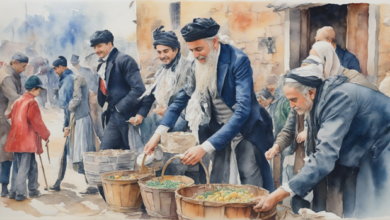

The Banquet Is Ready — But Where Are the Guests?
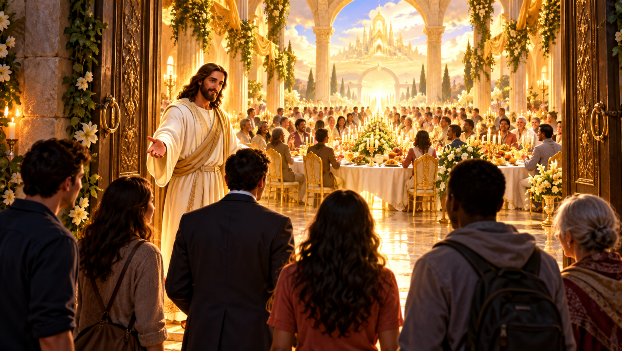
Reflections on Isaiah 25:6–10a, Psalm 23, Philippians 4:12–14, 19–20, and Matthew 22:1–14
“Everything is ready; come to the wedding feast.” — Matthew 22:4
Imagine preparing a magnificent celebration for someone you love dearly. You spare no expense. You carefully select the food, prepare the venue, arrange the seating, and send invitations to everyone you wish to share in your joy.
The day finally arrives. Everything is ready.
But the guests do not come.
Some are too busy. Others have more important things to do. Some simply cannot be bothered.
How would you feel?
Now imagine that the one extending the invitation is Almighty God Himself, and the celebration is not merely an earthly wedding but the eternal banquet of His Kingdom.
This is the extraordinary invitation presented to us in the readings from Isaiah and the Gospel of Matthew.
And it raises a question that every one of us must eventually answer:
God has prepared a place for me at His table. Am I willing to come?
1. A God Who Wants to Wipe Away Our Tears
The prophet Isaiah presents one of the most beautiful promises in all of Sacred Scripture.
God speaks of preparing a magnificent banquet for all peoples, a feast of rich food and fine wines. But the banquet itself is only the beginning of the promise.
Something far greater is about to happen.
God promises to remove the veil of mourning covering humanity, to destroy death forever, and to wipe away the tears from every face.
Pause for a moment and consider the magnitude of that promise.
We live in a world overflowing with tears.
There are mothers grieving children lost to violence. Families struggling to put food on their tables. Parents watching helplessly as their children turn away from the faith. Husbands and wives grieving broken marriages. People suffering from illness, loneliness, depression, abandonment, and disappointment.
There are entire nations wounded by war, poverty, injustice, and displacement.
Even here in our Caribbean communities, beneath the beauty of our islands and the warmth of our people, there is tremendous suffering. Behind many smiling faces are hearts carrying burdens that few others know about.
And into this suffering, God speaks a promise:
Death will not have the final word. Suffering will not have the final word. Mourning will not have the final word. God will.
Isaiah’s vision is not simply a promise that life will become a little easier. It points toward the ultimate victory of God over sin and death, fulfilled through Jesus Christ and brought to completion in His eternal Kingdom.
This is the God who invites us to His banquet.
Not a distant God, indifferent to our suffering, but a loving Father who desires to gather His children, heal their wounds, and welcome them into everlasting joy.
What an extraordinary invitation!
2. The Lord Is My Shepherd — He Prepares a Table for Me
Our responsorial psalm, Psalm 23, beautifully continues this theme.
The Lord is our Shepherd. He guides us, restores us, accompanies us through dark valleys, and prepares a table before us.
Notice something important.
The psalm does not promise that we will never walk through darkness.
It promises that we will never have to walk through darkness alone.
Even in the valley of the shadow of death, the Shepherd remains with us.
And this same Shepherd prepares a table for us.
For Christians, this image finds a particularly beautiful expression in the Holy Eucharist, where Jesus Christ, the Good Shepherd, nourishes His flock with His own Body and Blood.
The One who leads us through the valley is the same One who feeds us at His table.
How blessed we are!
Yet how easily we can become so accustomed to this extraordinary gift that we begin to take it for granted.
3. The Wedding Feast — When the Invited Guests Refuse to Come
In Matthew 22:1–14, Jesus tells the parable of a king who prepares a wedding feast for his son.
The banquet is ready. The invitations have already been issued. The guests have been chosen.
But when the servants go to summon them, the invited guests refuse.
The king sends another group of servants with an even more urgent message.
Everything has been prepared. The meal is ready. Come to the feast!
Still, they refuse.
One goes to his farm. Another goes to his business.
Others go even further, mistreating and killing the king’s servants.
It is difficult to imagine such a response to an invitation of such generosity.
But Jesus is not merely telling a story about discourteous wedding guests.
He is revealing something deeply troubling about the human heart.
God invites, but humanity often refuses.
God calls, but we are distracted.
God offers eternal life, but we become absorbed in temporary things.
And sometimes, rather than merely ignoring His messengers, humanity actively rejects those who speak His truth.
In its original setting, the parable confronts the religious leaders who resisted God’s call through the prophets and ultimately through His Son.
But the message does not end with them.
It reaches across the centuries and speaks directly to us.
4. How Does Someone Go from Being Invited to Being Unworthy?
This is perhaps one of the most sobering questions raised by the Gospel.
The king eventually declares that those originally invited were not worthy.
But how did they become unworthy?
Were they unworthy because they were poor? Because they were sinners? Because they were imperfect?
No.
Their unworthiness was revealed in their response to the invitation.
They had been offered a place at the king’s table, but they rejected the generosity of the one who invited them.
They were not excluded because the king was unwilling to welcome them. They excluded themselves by refusing his invitation.
Consider how this can happen in our own spiritual lives.
Very few people wake up one morning and deliberately decide to abandon God completely.
More often, the journey away from God happens gradually.
We become busy.
Prayer gets postponed.
Sunday Mass becomes optional.
Confession becomes something we will get around to eventually.
We begin to make compromises with sin.
The voice of conscience grows quieter.
The things of this world become increasingly important, while the things of God become increasingly distant.
And before we realize what has happened, the invitation that once meant so much to us has become something we hardly think about.
The farm and the business in the parable were not necessarily bad things.
Work is good. Providing for one’s family is good. Managing our responsibilities is good.
But even good things can become obstacles when we allow them to take the place that belongs to God.
This is one of the great spiritual dangers of our time.
We can become so occupied with the gifts of God that we forget the God who gives them.
The invited guests did not lose their place because the king stopped loving them.
They lost their place because they refused to respond to his love.
And this is a warning that every Christian should take seriously.
Being baptized, having a Catholic upbringing, or identifying ourselves as members of the Church does not mean that our response to God no longer matters.
Grace is a gift, but it calls for a response.
God’s invitation must be received with faith, repentance, love, and a willingness to follow Him.
5. The Wedding Hall Must Be Filled!
There is another remarkable detail in the parable.
Despite the rejection of the original guests, the king does not cancel the wedding feast.
He does not abandon the celebration.
Instead, he sends his servants out to the crossroads with instructions to invite everyone they can find.
And the servants gather people from the roads, both good and bad, until the wedding hall is filled.
What an extraordinary image of God’s desire to save!
The invitation is extended beyond those who originally received it.
The doors are opened wide.
Those who might never have imagined themselves sitting at the king’s table are now welcomed into the celebration.
This points to the universal call of the Gospel. God’s salvation is offered to all peoples, all nations, and all walks of life.
No one is beyond the reach of His invitation.
The sinner is invited.
The wounded are invited.
The person who has wandered far from God is invited.
The one who believes that life has become too broken to be repaired is invited.
The person who has not entered a church in twenty years is invited.
God does not wait until we have made ourselves perfect before calling us. He calls us so that His grace may transform us.
And this brings us to something that should deeply concern every Catholic community.
6. Our Empty Churches — Where Are the Guests?
Travel through many of our communities on a Sunday morning and enter our churches.
In some parishes, the congregation is vibrant and the pews are filled.
But in others, entire sections of the church remain empty.
Sometimes more pews are empty than occupied.
And we must ask ourselves: Why?
Is it because God has stopped inviting?
Certainly not.
Is it because the Eucharist has become less holy?
Absolutely not.
Is it because Christ is somehow less present in the tabernacle or upon the altar?
Never!
The same Jesus who gave Himself for us on Calvary continues to make Himself present in the Holy Eucharist.
The same Lord who fed the multitudes continues to nourish His people.
The same God who promises an eternal banquet continues to invite us to His table.
Yet so many are absent.
Of course, we must be careful not to judge the hearts of those who are missing.
Some are sick. Some are elderly or housebound. Some are caring for loved ones. Others carry deep wounds from experiences within the Church. Still others are struggling with questions, doubts, or personal circumstances we may know nothing about.
These people deserve our compassion, our prayers, and our pastoral care.
But we must also acknowledge another reality.
For many, God has simply become less important than everything else.
There is time for entertainment.
Time for shopping.
Time for sporting events.
Time for social gatherings.
Time for business.
But somehow, there is no time for Sunday Mass.
And perhaps the most troubling aspect is that we can gradually become comfortable with this absence.
We see empty pews and simply accept them as normal.
But should we?
The king in the parable wanted his wedding hall filled.
Should we not also desire to see our churches filled with people who have rediscovered the joy of encountering Jesus Christ?
Not because we are interested in numbers for their own sake.
Not because a full church makes a parish look successful.
But because every empty place represents the possibility of someone missing an encounter with the living God.
Yet we must go further.
It is not enough simply to fill the pews.
Our desire must be to see hearts converted, lives transformed, families restored, and people drawn into a living relationship with Jesus Christ.
A church can be full of people whose hearts are far from God.
And a small congregation can be filled with extraordinary faith.
The goal is not merely attendance.
The goal is communion with Christ.
Still, if we truly believe that Jesus is present in the Eucharist, should we not be eager to invite others to encounter Him?
Perhaps we need to recover something of the urgency of the servants in the parable.
Go to the crossroads.
Go to the streets.
Go to the people who have stopped coming.
Go to those who feel forgotten.
Go to those who believe the Church has no place for them.
And invite them.
Not with condemnation, but with love.
Not with accusations, but with compassion.
Not simply by telling them what they are missing, but by helping them discover Whom they are missing.
7. The Wedding Garment — An Invitation Is Not the Same as Conversion
The Gospel contains one final detail that we must not overlook.
When the king enters the wedding hall, he notices a guest who is not wearing a wedding garment.
The king questions him, but the man remains silent.
He is then removed from the feast.
At first, this seems surprising.
After all, the king had invited everyone from the streets. Why would someone now be excluded?
The wedding garment helps us understand that accepting God’s invitation involves more than simply showing up.
The Church has traditionally understood the wedding garment as pointing toward the life of grace and charity, the new life that should flow from our acceptance of Christ.
God welcomes sinners, but He does not call us to remain unchanged.
His mercy is not permission to continue deliberately in sin.
His grace invites us to repentance, holiness, and transformation.
The invitation is free.
Salvation cannot be purchased or earned by our own efforts.
But the gift must be received and lived.
We cannot cling stubbornly to sin while insisting that our relationship with God requires no change.
This is why the Sacrament of Reconciliation is such a precious gift.
When we have fallen, God calls us back.
When we have wandered, He seeks us.
When our hearts have become hardened, His grace can soften them again.
And when we return to Him in genuine repentance, we discover that His mercy is greater than our sins.
The wedding garment is not a symbol of our own perfection.
It is a reminder that we are called to be clothed in the new life of Christ.
8. Saint Paul — Learning the Secret of Contentment
The second reading from Philippians adds another important dimension to our reflection.
Saint Paul speaks about knowing what it is to live in poverty and abundance, to be well fed and to go hungry.
He has learned to face every circumstance through the strength that comes from Christ.
What a contrast with the guests in the Gospel!
They were so occupied with their possessions, business, and personal concerns that they failed to recognize the value of the invitation before them.
Paul, however, had discovered something far greater than material comfort.
He had discovered Christ.
And because Christ was his strength, Paul could face both prosperity and hardship without losing sight of what mattered most.
This is a lesson our world desperately needs.
We spend so much of our lives pursuing things that promise happiness.
More money.
More possessions.
Greater recognition.
Greater comfort.
And while material needs are real and legitimate, none of these things can satisfy the deepest hunger of the human heart.
That hunger is ultimately for God.
Saint Paul reminds us that the greatest treasure we can possess is not something this world can give or take away.
It is our relationship with Jesus Christ.
9. The Banquet Is Already Before Us
There is something profoundly moving about the connection between Isaiah’s banquet, the wedding feast in Matthew, and the Holy Eucharist.
Isaiah points us toward the eternal banquet where God will destroy death and wipe away every tear.
Jesus reveals that the Kingdom of Heaven is like a wedding feast prepared by a king for his son.
And at every celebration of the Holy Mass, the Church is given a foretaste of that heavenly banquet.
The Eucharist is not merely a symbolic meal or a religious gathering.
It is the sacramental making-present of Christ’s one sacrifice, and in Holy Communion we receive the Lord Himself.
Think about that.
The God who created the heavens and the earth invites us into communion with Himself.
The One who conquered death offers us the Bread of Life.
The One who promises to wipe away every tear comes to nourish us with His own Body and Blood.
How can we remain indifferent to such love?
And yet, even here, the invitation calls for a worthy response.
The Church teaches us to approach Holy Communion with faith, reverence, and proper spiritual preparation, including sacramental confession when we are conscious of grave sin.
God’s table is a place of mercy, but it is also holy.
We are invited not merely to receive something from God, but to give ourselves to Him.
To allow His grace to change us.
To become more like the One whom we receive.
10. God Is Still Sending Out His Invitations
Perhaps the most beautiful truth running through these readings is that God has not stopped calling His people.
His invitations continue to arrive in countless ways.
Sometimes through the gentle voice of conscience.
Sometimes through a passage of Scripture.
Sometimes through the encouragement of a friend.
Sometimes through suffering that awakens us to what truly matters.
Sometimes through a homily, a retreat, a song, or an unexpected encounter.
Sometimes through the quiet longing of a heart that knows something is missing.
And sometimes through the simple sound of church bells calling us to worship.
God continues to invite.
The question is whether we are listening.
Perhaps you have been away from the Church for many years.
Perhaps your prayer life has grown cold.
Perhaps you have allowed bitterness, disappointment, or sin to create distance between you and God.
Perhaps you have been attending Mass faithfully but have lost the sense of wonder that should accompany every encounter with the Eucharistic Lord.
Or perhaps you are carrying such heavy burdens that you wonder whether God has forgotten you.
Hear the invitation again.
The banquet is ready.
There is a place for you in God’s loving plan.
He has not stopped calling you.
And as long as we have life, we are called to respond to His grace.
Do not allow the noise of this world to drown out His voice.
Do not allow temporary things to rob you of eternal treasures.
Do not allow yesterday’s sins to convince you that tomorrow’s conversion is impossible.
Come back to prayer.
Come back to the Sacraments.
Come back to the Word of God.
Come back to the Lord who loves you.
And having accepted His invitation, become an instrument through whom others may hear it too.
For the invitation was never meant to stop with us.
A Final Reflection: What Will My Answer Be?
The guests in the Gospel had received an extraordinary invitation.
But they failed to recognize its value.
Some were distracted.
Some were indifferent.
Others were openly hostile.
And one who entered the banquet failed to respond in the manner the occasion required.
Each of these responses invites us to examine our own hearts.
Have I become too busy for God?
Have I allowed good things to become more important than the One who is Goodness itself?
Have I taken the Holy Eucharist for granted?
Am I responding to God’s grace with genuine conversion?
And am I doing anything to help others rediscover the joy of His invitation?
The banquet of eternal life is not a human invention.
It is God’s promise.
And the God who makes that promise is faithful.
One day, every earthly banquet will come to an end.
Every possession will pass away.
Every achievement will fade.
But the joy of communion with God will endure forever.
May we never become so preoccupied with the passing things of this world that we miss the eternal celebration for which we were created.
The banquet is ready. The King is calling. Will we come?
Closing Prayer: Lord, Give Me a Heart That Responds
Heavenly Father,
You are the God who prepares a banquet for Your children, the God who promises to wipe away every tear, the God who desires that all people come to know Your love and share in Your eternal Kingdom.
Yet, Lord, how often have I ignored Your invitation?
How often have I allowed the cares of this world, my personal ambitions, my distractions, and even my sins to become more important than You?
Forgive me, Lord.
Forgive me for the times I have been too busy to pray, too distracted to listen, too comfortable to change, and too indifferent to recognize the extraordinary gift of Your presence.
Give me a heart that is open to Your invitation.
A heart that recognizes Your voice in the Scriptures, in the teachings of Your Church, in the needs of my brothers and sisters, and in the gentle prompting of Your Holy Spirit.
Lord Jesus, awaken in me a deeper hunger for You.
Never allow me to take the Holy Eucharist for granted.
When I approach Your altar, help me to recognize the wonder of Your love and the holiness of Your presence.
Clothe me in the wedding garment of Your grace.
Where there is sin in my life, lead me to repentance.
Where there is pride, teach me humility.
Where there is selfishness, teach me generosity.
Where there is indifference, rekindle the fire of Your love.
And where my heart has grown cold, draw me once more into the warmth of Your embrace.
Lord, I pray also for those who have wandered away from You.
For those who no longer attend Mass.
For those who have been hurt or disappointed.
For those who feel unwelcome, forgotten, or unworthy.
For those who have become so absorbed in the things of this world that they no longer hear Your invitation.
Reach into their hearts, Lord.
Speak to them in ways they can recognize.
And use me, if it is Your will, as an instrument of Your love to help them find their way home.
May our churches become places of genuine welcome, healing, conversion, and encounter with You.
May our communities reflect the joy of Your Kingdom.
And may we never rest content while so many of Your children remain unaware of the feast You have prepared.
Father, when the final invitation comes, may I be found ready, not through any merit of my own, but through the saving grace of Your Son, Jesus Christ.
Until that day, help me to answer Your invitation anew, each and every day of my life.
Lord, You have prepared the banquet. Give me the grace to say yes.
Through Christ our Lord.
Amen.
Fully Catholic — Sharing the Joy of the Faith