
Battle For Souls – Part 5 – A Call to Action – Repentance And Conversion
Introduction – Why This Final Step Matters
We have now come to the end of this first series, Battle for Souls. And I want to pause here and say why we have been doing all of this. Some people might be wondering, “Why does Fully Catholic keep talking about sin? Why spend so much time on a subject that makes us uncomfortable?” The answer is simple: because it is a matter of life and death — not just physical, but eternal.
We live in a world that tells us to push sin aside, to call it old-fashioned, to dismiss it as judgmental. But if sin is not real, then the Cross of Jesus Christ makes no sense. Why would the Son of God have endured suffering, humiliation, and death if sin were only a myth? He came because sin is real, because the consequences are eternal, and because without Him we would be lost.
This series has been about bringing that reality back to the forefront — not to condemn anyone, but to remind us that we were created for so much more. We were made for God, for eternity, for life that never ends. And the choices we make here, in this short life, determine where we will spend forever. That is why this final episode is the most urgent of all: it is not just about knowing what sin is, but about responding.
A Review of What We’ve Covered
Episode 1: Living As If There Were No Sin
We began by looking at our culture today, a world that has lost the sense of sin. Many live as if there is no such thing as right or wrong, as if truth is whatever you feel in the moment. “If it feels good, do it” has become the mantra of our time. But Scripture warns us: “Woe to those who call evil good and good evil, who put darkness for light and light for darkness” (Isaiah 5:20).
To deny sin is to deny God Himself, because sin is, at its heart, a rejection of Him.
Episode 2: What Is Sin?
We then defined sin, not in vague or cultural terms, but as the Church teaches: sin is anything that offends God — in thought, word, deed, or omission. That means the lies we tell, the gossip we spread, the things we fail to do when someone is in need, the addictions we entertain in secret, even the thoughts we allow to fester in our minds. St. Paul put it clearly in Romans 7: there is within us a struggle, a resistance to doing what is good. We called it a “sin factory” inside the human heart. But even here, God does not abandon us; His desire is always reconciliation.
Episode 3: Mortal Sin and Venial Sin
Next, we made the important distinction between mortal sin and venial sin. The Catechism tells us that mortal sin destroys charity in the heart, cutting us off from God’s life, while venial sin weakens charity and makes us more inclined to fall deeper. Mortal sin requires three things: grave matter, full knowledge, and deliberate consent (CCC 1857). In real life, that means choices like abortion, adultery, theft, or deliberate rejection of God. Venial sins are lesser — impatience, gossip, laziness — but if ignored, they can build habits that lead us into mortal sin.
Episode 4: The Consequences of Sin
And then, last time, we examined the consequences of sin. We saw two dimensions: first, the natural consequence of the Fall, when Adam and Eve broke trust with God and all creation was wounded. And second, the consequences of unrepentant sin in our own lives today. Addiction chains us. Pornography destroys intimacy and families. Corruption robs whole communities of justice. Gossip wounds reputations and divides hearts. And beyond all these earthly consequences lies the eternal one: “The wages of sin is death” (Romans 6:23).
Now, as we come to this final episode, we gather all these truths together and face the ultimate question: What will we do about it?
The Loss of the Sense of Sin – Pope St. John Paul II
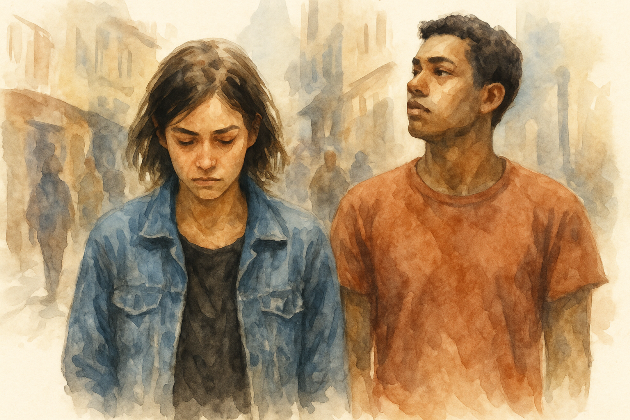
A Prophetic Warning
Pope St. John Paul II, in his apostolic exhortation Reconciliatio et Paenitentia (1984), wrote words that are more urgent today than ever before. He said:
“The loss of the sense of sin is a form or consequence of the denial of God: not only of the God of the Christian faith but also of the God of simple human conscience. If God is dead, then sin is also dead.” (RP 18)
This was his warning: when we lose God, we lose the very ability to recognize sin. And if sin no longer exists, then mercy, repentance, and salvation no longer make sense. In short, the Cross of Christ becomes meaningless.
Four Key Takeaways from John Paul II
1. Denial of God = Denial of Sin
When God is pushed out of society, morality becomes relative. Sin gets renamed. Instead of “wrong” or “evil,” we hear words like “choice,” “freedom,” “progress,” or “self-expression.”
- Real life today: Abortion is called “healthcare.” Pornography is called “adult entertainment.” Euthanasia is called “dying with dignity.” The act hasn’t changed — only the label has. But by changing the label, society hides the sin.
2. Relativism Erases Sin
John Paul II pointed out that when truth itself is denied, sin disappears. If there is no objective truth, then who’s to say what is wrong? Everyone becomes their own judge.
- Real life today: We hear it everywhere: “That’s your truth, not mine.” Or “As long as I’m not hurting anyone, it’s fine.” This mindset erases sin — but it also erases responsibility.
3. Excusing Sin Through Psychology or Sociology
The Pope was not dismissing science or human study — but he warned against reducing sin to only social or psychological factors. If everything is explained as trauma, conditioning, or “society’s fault,” then no one is personally responsible.
- Real life today: Theft is excused as “poverty,” violence as “oppression,” sexual sin as “biological instinct.” While environment matters, John Paul II insisted that every human being is still free and responsible before God.
4. Social Sin Without Personal Sin
One of his sharpest insights was this: people are quick to condemn “structures of sin” — corruption, racism, poverty — but slow to admit their own part. He wrote:
“To speak of social sin is to point out that each sin is personal in origin, and that each person is responsible.” (RP 16)
In other words, society’s sins are the accumulation of personal sins. Structures don’t magically appear; they are built and maintained by individual choices.
- Real life today: People rail against government corruption, but also cheat on taxes. People condemn violence, but harbor hatred in their hearts. People denounce injustice, but gossip and destroy reputations. We want to fix the world without fixing ourselves.
The Fruit of Denying Sin
John Paul II linked this loss of the sense of sin directly to the collapse of confession:
“It is a symptom of the loss of the sense of sin when people fail to go to confession because they no longer consider it necessary.”
Look at our parishes: Confession lines are empty, not because we are holy, but because we no longer think we need forgiveness. Instead of repentance, we live in denial. Instead of humility, we excuse ourselves.
Why This Matters for Us Today
This is not just theory. The loss of the sense of sin is visible all around us:
- Churches growing emptier, not because people stopped sinning, but because people stopped believing sin exists.
- Families collapsing under the weight of “private choices” that ripple outward — affairs, addictions, lies.
- Young people raised in a world where almost nothing is called sinful anymore — so their consciences are never formed.
And here is the most dangerous part: if sin doesn’t exist, then neither does grace. If there is nothing to be forgiven, then Christ died for nothing.
Bringing It Home – The Mirror for Us
We must ask ourselves: have I lost the sense of sin?
- Do I call sin by softer names to ease my conscience?
- Do I justify my actions by saying, “Everybody’s doing it”?
- Do I condemn the sins of the world while ignoring my own?
- Do I excuse myself because of my upbringing, my stress, my wounds — instead of taking responsibility before God?
The Pope’s warning is not just for society “out there.” It is for us.
The Call to Action – Repentance and Conversion
1. Repentance and Conversion – Don’t Delay
The Gospel is urgent. Jesus never said, “Take your time and get holy when you feel like it.” Instead, His cry was:
- “Repent, for the kingdom of heaven is at hand.” (Matthew 3:2)
- “Be ready, for the Son of Man is coming at an hour you do not expect.” (Luke 12:40)
- “Now is the day of salvation.” (2 Corinthians 6:2)
We don’t know the day or the hour when our lives will end, or when Christ will return. To keep postponing conversion is like standing in the middle of the road while a truck bears down on us, saying, “I’ll move later.” Later may never come.
If the Lord were to return tonight, how would He find you? Would He find you clinging to sin, or striving to live in His grace? Eternity is decided in the present moment. That’s why we must not delay.
2. Awaken Your Conscience
Sin dulls the conscience. If we ignore it long enough, our hearts grow numb. St. Paul warned that people can have their consciences “seared” (1 Timothy 4:2) — burned until they no longer feel. That’s the danger of living in denial of sin: eventually, we don’t even recognize it anymore.
How do we awaken the conscience?
- Daily Examination of Conscience – each evening, reflect honestly: What did I do today in thought, word, deed, or omission? Where did I fail in love? Where did I cooperate with God’s grace?
- Regular Reading of Scripture and Holy Books – the Word of God reforms our conscience. If sin has warped it, Scripture reshapes it. “Your word is a lamp to my feet and a light to my path.” (Psalm 119:105)
- Humility – admit who we are: sinners in need of grace. And when we fall, avoid the trap of self-condemnation. We rise, we repent, we try again. God values persistence in love more than outward success.
3. Return to the Sacraments
The sacraments are not decorations; they are lifelines.
- Confession: The Catechism calls it the “sacrament of healing.” It is where chains are broken, shame is lifted, and new life is given. Empty confessionals are not a sign of holiness, but of blindness. Go back. Start again. Christ is waiting.
- Eucharist: Here we receive Christ Himself, the Bread of Life, who strengthens us to resist temptation and grows us in love. To live without the Eucharist is like trying to fight a battle without food.
4. Accountability and Witness
Conversion is not meant to be lived alone. The Christian life is a community journey.
- Surround yourself with people who encourage holiness. St. Paul says: “Bad company corrupts good morals.” (1 Corinthians 15:33).
- In many cases, repentance will require changing friends, changing habits, changing environments. If the people around you are pulling you back into darkness, you must choose: Christ or comfort.
- Be a witness to others. Speak the truth in love when the world normalizes sin. Your courage might be the spark that awakens another’s conscience.
5. Rooted in God’s Love
Here is the heart of it all: repentance is not about fear alone, but about love.
- John 3:16 tells us: “For God so loved the world that He gave His only Son, that whoever believes in Him should not perish but have eternal life.”
- Romans 8:31–39 assures us that nothing — not sin, not failure, not weakness — can separate us from the love of God in Christ.
We will fall. We will stumble. There will always be a distance between who we are now and who God calls us to be. But God’s love bridges that distance. He does not ask for our success; He asks for our love. He does not abandon us when we are weak; He holds us in His arms as His wounded children.
So repent, yes. But repent in hope. Repent knowing that God’s mercy is always greater than our sin.
Stories that Bring It Home
- The Addict: A man said, “I’ll quit tomorrow.” Tomorrow never came, and he lost his family. Sin postponed becomes sin enslaved.
- The Returning Daughter: A woman avoided confession for 20 years. She kept saying, “God won’t want to hear me again.” When she finally went, she realized God had been waiting every one of those years with open arms.
- The Friend Switch: A young man left behind friends who always dragged him back into sin. It hurt at first, but later he said: “That’s when I finally started to grow.”
Final Word
Friends, this is the Battle for Souls. The stakes are eternal. Heaven and hell are real. Christ has already won the victory on the Cross, but we must choose to enter into it.
Do not delay. Do not excuse. Do not deny. Today is the day of salvation. Rise, repent, believe the Gospel, and walk in the light of Christ.
Closing Prayer
Heavenly Father,
We come before You at the end of this series with humble hearts, acknowledging that we are sinners in need of Your mercy. We confess that too often we have ignored Your voice, excused our sins, or lived as though sin were not real. Yet You are a God of mercy, slow to anger and rich in steadfast love.
Lord Jesus Christ,
You came into the world not to condemn us, but to save us from our sins. By Your Cross, You have broken the chains of sin and death. Teach us never to take lightly the gift of Your sacrifice. Give us courage to repent today, not tomorrow, and to choose life in You rather than the empty promises of this world.
Come, Holy Spirit, Advocate and Comforter,
You are the One whom the Lord promised would lead us into all truth. Enlighten our hearts and minds to recognize sin for what it is — not a mistake or a weakness, but a rejection of God’s love. Awaken our consciences. Heal what is wounded, straighten what is crooked, and set us free to walk in holiness. Fill us with Your gifts, especially wisdom, fortitude, and fear of the Lord, that we may strive daily to be holy as our Father in heaven is holy.
O Blessed Virgin Mary, Refuge of Sinners,
In this month dedicated to you, we entrust ourselves to your maternal care. You who stood at the foot of the Cross, you who watched your Son pour out His blood for sinners, intercede for us. Pray that our hearts may never grow numb to the reality of sin, but remain tender to God’s call. Lead us always back to your Son, Jesus, and teach us to say “yes” as you did, with humility and trust.
Father, Son, and Holy Spirit,
We offer You our weakness, our struggles, our brokenness. Help us to rise each time we fall, to walk in Your grace, and to persevere to the end. May nothing — neither sin, nor fear, nor despair — separate us from the love of God in Christ Jesus our Lord.
We ask this through Christ our Lord. Amen.