
Actor who portrays David in Prime Video’s ‘House of David’ becomes Catholic

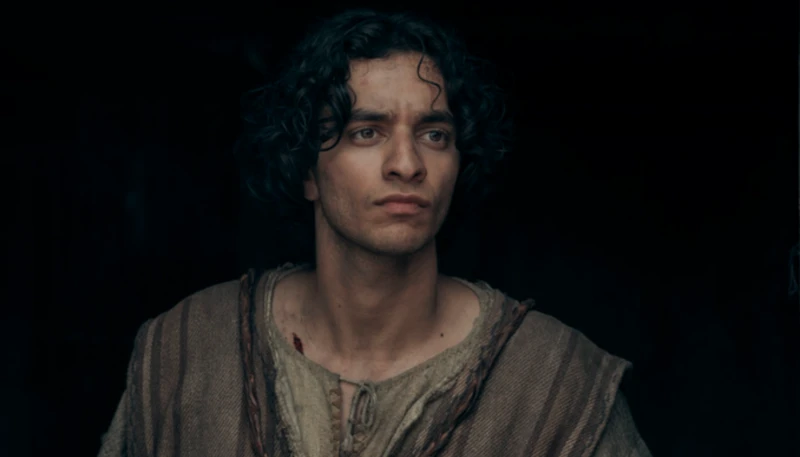 Michael Iskander as David in Prime Video's "House of David." / Credit: Jonathan Prime/Prime
 CNA Staff, Aug 22, 2025 / 16:40 pm (CNA).
Michael Iskander, the actor known for playing the lead role of King David in the new hit Prime Video series “House of David,” announced Aug. 21 that he has become Catholic.
“Today is a very special day, that looking back has been a long time in the making. Today I joined the Catholic faith,” he wrote in an Instagram post. “I’ve felt a calling to this Church for a long time, and as time went on, this calling became louder and louder.”
He added: “Eventually I ran into some really amazing people that helped me along the way. And rather than being the end of the road, this is the beginning of the journey. Please pray for me as I continue my walk with God, and thanks for celebrating this day with me.”
Iskander, 23, has shared in several interviews that he always dreamed of portraying King David but never thought it would happen. He was taking part in a Broadway production when he heard about the upcoming series focusing on Israel’s famous king. After his initial audition, Iskander was given a “no.” A couple weeks later, he was called to reaudition. Iskander was advised by his mother to pray and fast ahead of the second audition. Two months later, he was offered the role.
“For me, oftentimes God speaks with the softest voice and, for me, the softest voice was telling me ‘just hold out’ … I don’t want to say that I knew this was mine — I really believe that God can choose anyone to accomplish his will,” Iskander said in an interview with Naomi Raine. “It’s not about me, it’s about him doing his will and it’s about someone who was willing to do his will.”
“So, I think in a way having that audition kind of not go through … I think it was God’s way of telling me: ‘Listen, there’s going to be rejection and there’s going to be a tough time and there’s going to be challenges, but the only way you get through is with me,’” he added.
null
Speaking at the Liberty University convocation, he shared that it’s easy for actors who have a role such as this to “make it about the human being rather than about God.”
“The show, for me, shouldn’t be called ‘House of David.’ It should be called ‘House of the Lord,’ ‘House of God,’ because it’s about him,” he said. “David’s heart was for the Lord and so that’s what I try to find in every scene, in every moment is where the Lord is and where the Holy Spirit can be found.”
Iskander has also spoken about the importance Scripture played while filming the series and portraying this famous figure.
“Keeping in mind the reverence for Scripture and what he means biblically, I found myself reading the Psalms and the Book of Samuel constantly just to be reminded of the true character of David and his heart and truly trying to find his heart in every single moment,” he told CNA in an interview.
He emphasized the importance of “focusing on the reverence for Scripture” in approaching his portrayal of David.
“House of David” is produced by the independent studio Wonder Project, which caters to faith-based and values-oriented audiences. The first season of the series — which aired exclusively on Prime Video — garnered over 40 million views worldwide and reached No. 1 on Prime Video in the United States.
In June, Wonder Project announced the launch of an exclusive subscription that will be offered on Prime Video that will allow subscribers to get early access to new original films and series produced by the production studio.
Season 2 of “House of David” will first be released on the Wonder Project subscription service this fall. It will then be available to all Prime Video users at a later date.