
Archdiocese of Madrid holds event featuring testimonies of LGBTI families

 null / Credit: Unsplash
 ACI Prensa Staff, Jun 12, 2023 / 17:00 pm (CNA).
The Archdiocese of Madrid held an event on Saturday featuring testimonies “of Christian fathers and mothers with LGTBI children organized by CRISMHOM [Homosexual Christian Men and Women of Madrid] families.” The announcement of the second edition of the event, on the archdiocese’s website and on social media, sparked controversy on Twitter.
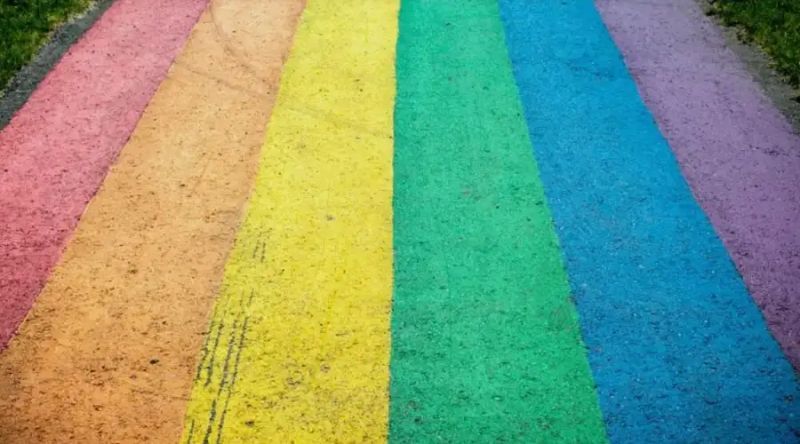
The June 10 event at St. Francis of Assisi Parish was announced with the rainbow-colored theme “The Church is already diverse. Open your eyes and your heart!”
The program included an introduction and welcome, testimonies from LGBTI families, news, a colloquium, and a final prayer.
The event was organized by Homosexual Christian Men and Women of Madrid (CRISMHOM), which describes itself as a “nonprofit and public benefit association, Christian, lesbian, gay, transsexual, bisexual, and heterosexual.”
This association is part of the FELGTB (Spanish Federation of Lesbians, Gays, Transsexuals, and Bisexuals), which is committed to “bear witness to the compatibility of Christian faith with sexual orientation and gender identity.”
On its website, the association states that “marriage between people of the same sex is perfectly legal in Spain and a completely normalized reality.”
In relation to a campaign against the inclusion of a wedding between two women in a children’s series for ages 4-7, CRISMHOM criticized that “the appearance of two people of the same sex who love each other and get married” is considered immoral.
The association also rejected the “Homosexuality and Hope” guide published by the Diocese of Alcalá de Henares in 2011. At that time CRISMHOM stated: “We believe that love between two people (regardless of their affective-sexual orientation) is not an illness but a gift from God.”
In response to some statements by the bishop emeritus of Tarragona, Jaume Pujol, CRISMHOM posted on its website that “homosexual behavior is not a moral reality (nor is heterosexual behavior) but rather a reflection of what a person is, of what he experiences, thinks, and feels.”
The association also published a statement on “the Christian meaning of love between people of the same sex.”
According to the Catechism of the Catholic Church, “homosexual acts are intrinsically disordered” and “under no circumstances can they be approved.”
“The number of men and women who have deep-seated homosexual tendencies is not negligible. This inclination, which is objectively disordered, constitutes for most of them a trial. They must be accepted with respect, compassion, and sensitivity. Every sign of unjust discrimination in their regard should be avoided,” it says.
“These persons are called to fulfill God’s will in their lives and, if they are Christians, to unite to the sacrifice of the Lord’s Cross the difficulties they may encounter from their condition. Homosexual persons are called to chastity. By the virtues of self-mastery that teach them inner freedom, at times by the support of disinterested friendship, by prayer and sacramental grace, they can and should gradually and resolutely approach Christian perfection.”
Controversy on social media
The announcement by the Madrid Archdiocese has provoked many critical comments but also some positive ones.
In response, Father Pablo Pich Aguilera of the Archdiocese of Barcelona theorized about the possibility that the archbishop of Madrid, Cardinal Carlos Osoro, may cancel the event.
Father Manuel Navarro, a priest of the Archdiocese of Madrid, pointed out that the event “could be a good opportunity, if it were accompanied by the doctrine and tradition of the Church on the family and marriage.”
However, he added: “If it is to change the faith of the Church, [it’s] a double-edged sword.”
There have also been reactions in favor of the initiative. Juan Carlos González Sanz, who identifies as “Christian, socialist” and who ran for mayor as a candidate of the Spanish Socialist Workers’ Party (PSOE) in the last municipal elections, tweeted: “A proposal that brings @archimadrid closer to the lives of many people who feel that the Church does not welcome them.”
Twitter user @cristianos_LGTB signaled its support with a simple “thank you.”
Archdiocese of Madrid: It’s ‘a pastoral activity’
In the midst of the controversy, ACI Prensa, CNA’s Spanish-language news partner, queried sources in the Archdiocese of Madrid, which assured that the event is “a pastoral activity of accompaniment that is within the mission of the Church” and that it was publicized just like other events.
This story was first published by ACI Prensa, CNA’s Spanish-language news partner. It has been translated and adapted by CNA.