
Epiphany: When Encounter Changes the Way Home

Please click the Play Button below to listen to audio
The Church, in her quiet wisdom, does nothing by accident. At the very beginning of the calendar year, just days after we celebrate Mary, the Mother of God—the woman through whom Christ entered human history—we are brought face to face with the Feast of the Epiphany. And what the Church places before us is not sentiment, not nostalgia, but revelation.
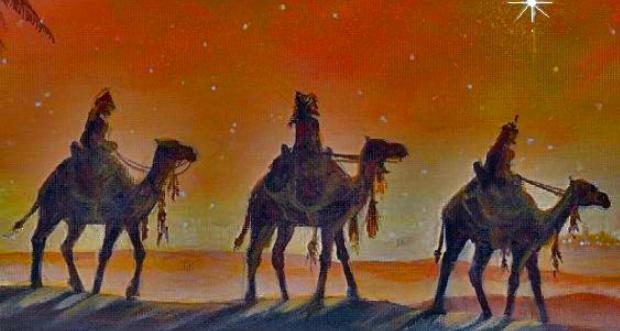
Epiphany is not merely the story of wise men, exotic gifts, and a guiding star. It is the moment when God declares—without ambiguity—that His Son is not only for one people, one nation, or one culture, but for the whole world. The Magi are not Israelites. They come from afar. They speak a different language. They read the heavens rather than the Scriptures. And yet, they are drawn—irresistibly—toward Christ.
This alone tells us something profound about our own moment in history.
A World Still Searching for Light
We live in a time of deep uncertainty. Nations tremble. Borders strain. Economies falter. Violence, displacement, and fear are no longer distant headlines—they are close, personal, and painfully real. Here in Trinidad and Tobago, the crisis unfolding in neighboring Venezuela is not theoretical. It touches our shores, our communities, our parishes, our consciences.
And in the midst of all this, people are asking the same question the Magi once asked, perhaps without even realizing it:
“Where is the one who has been born King?”
The Epiphany tells us that seeking is not a sign of weakness—it is the beginning of faith. The Magi did not have all the answers. They had only a star. And yet, they trusted it enough to leave familiarity behind.
How many today are doing the same? Leaving behind what once felt secure. Crossing borders. Carrying questions rather than certainties. Searching not just for safety, but for meaning.
Herod Still Lives
The Epiphany story is honest enough to include darkness. Herod represents a truth we would rather avoid: not everyone rejoices at Christ’s arrival. Some see Him as a threat. A disruption. A loss of control.
Herod is not only a historical figure. He lives wherever power is protected at the expense of truth, wherever fear masquerades as authority, wherever the innocent pay the price for political survival.
The Magi encounter this reality—and then they encounter something greater.
They Encountered the Child
Scripture tells us that when the Magi finally arrive, they do not find a palace. They find a child. Vulnerable. Dependent. Poor. And yet, they fall to their knees.
This is the scandal of Christianity: God makes Himself small so that no one is excluded from approaching Him.
Gold, frankincense, and myrrh are not merely symbolic gifts. They are confessions of faith:
- Gold for a King
- Frankincense for God
- Myrrh for one who will suffer and die
In that moment, the Magi see not only who Christ is—but what following Him will cost.
“They Went Back a Different Way”
This single line may be the most important verse of the Epiphany.
“Having been warned in a dream not to return to Herod, they departed for their country by another way.”
Encountering Christ always changes the way home.
You cannot meet Him and remain unchanged.
You cannot adore Him and return to old compromises.
You cannot kneel before Truth and continue to live comfortably with falsehood.
The Magi do not simply avoid Herod; they choose obedience over convenience. Their journey back is likely longer. Harder. Less predictable. But it is faithful.
And here is where Epiphany speaks directly to us today.
What Does Epiphany Mean for Us—Now?
It means that faith is not an escape from reality—it is a way through it.
For those facing uncertainty, Epiphany says: God is already ahead of you. The star does not appear at the destination; it appears at the beginning of the journey.
For those carrying fear—about the future, about politics, about safety, about stability—Epiphany says: Christ is not absent from the chaos; He is revealed within it.
For those who feel displaced, unseen, or forgotten, Epiphany proclaims: You are not outsiders to God’s plan. You are exactly the ones He is drawing.
And for those of us who claim to follow Christ, Epiphany asks a piercing question:
Are we willing to go home a different way?
Different in how we speak.
Different in how we welcome.
Different in how we respond to suffering.
Different in how we resist fear and refuse hatred.
A Feast for the Beginning of the Year
The Church places Epiphany here—at the threshold of the year—because it sets the tone for everything that follows.
Before resolutions.
Before plans.
Before predictions.
Encounter first.
Adoration first.
Conversion first.
If we begin the year on our knees, the road ahead—no matter how uncertain—will not be without light.
A Call to Action
This Epiphany, do not rush past the star.
Pause.
Seek.
Adore.
Ask yourself honestly:
- Where is God calling me to trust Him more deeply?
- What “Herod” do I need to stop negotiating with?
- What does it mean, concretely, for me to go back a different way?
Then take one step—just one—in obedience to that light.
A Prayer for Our Time
Lord Jesus Christ,
Light of the nations and hope of the searching heart,
You revealed Yourself not to the powerful,
but to those willing to journey in faith.
Guide us by Your light
when the road ahead is uncertain.
Protect those who are displaced, afraid, or seeking refuge.
Convert our hearts where fear has taken root.
Give us the courage to choose obedience over comfort.
May our encounter with You this Epiphany
change the way we live,
change the way we love,
and change the way we walk through this world.
We ask this through Christ our Lord. Amen.