

Buried With Christ, Raised to New Life: A Powerful Reflection on Romans 6:3–11
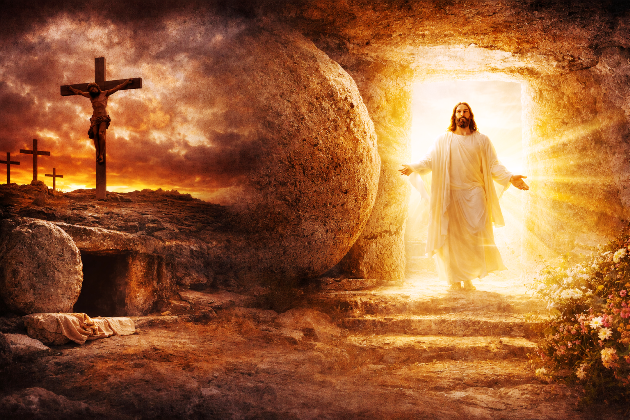
There are some passages in Scripture that we hear many times… but every now and then, one of them hits differently. Not because the words have changed—but because something in our hearts is ready to truly hear it.
At the Easter Vigil, after journeying through the great story of salvation in the Old Testament, after the lights return and the Gloria is sung with joy, the Church gives us a reading that is not just theological—it is deeply personal.
From the Letter to the Letter to the Romans, Saint Paul asks a question that should stop every one of us in our tracks:
“Are you unaware that we who were baptized into Christ Jesus were baptized into his death?” (Romans 6:3)
That is not a gentle introduction. That is a wake-up call.
Because if we truly understand what Saint Paul is saying here, then we cannot look at Baptism—or our Christian life—the same way again.
This passage is not simply explaining a doctrine. It is revealing an identity. It is telling us who we are now in Christ… and who we are no longer meant to be.
It speaks about:
- dying to sin
- being buried with Christ
- rising into a completely new life
- breaking free from slavery
- and living no longer for ourselves, but for God
And perhaps most importantly, it challenges us to ask:
👉 Am I living the life I was raised into… or am I still holding on to what should have been buried?
In a world where many feel stuck, defined by their past, their struggles, or their wounds—this passage proclaims something radical:
In Christ, you are not trapped.
In Christ, you are not bound.
In Christ, you are not who you used to be.
What follows is a verse-by-verse reflection on Romans 6:3–11, unpacking the depth, the challenge, and the incredible hope contained in every line.
Take your time with it.
Let it speak to you.
Let it challenge you.
And most of all… let it call you to rise.
Romans 6:3–11
A Verse-by-Verse Teaching
Verse 3
“Are you unaware that we who were baptized into Christ Jesus were baptized into his death?”
This opening is startling. Saint Paul begins almost with a holy shock: “Do you not know this?” In other words, this is basic Christian identity. This is not advanced theology for a few scholars. This is what every Christian is meant to know and live.
And what is it that we are meant to know?
That Baptism is not merely a ceremony, not merely a naming ritual, not merely a public sign, not merely a family tradition. Baptism is a real entrance into Jesus Christ Himself.
Paul does not say we were baptized merely in the name of Christ, though that is true. He says we were baptized into Christ Jesus. That means Baptism unites a person to Christ in a real and life-changing way. It is incorporation. It is immersion into His mystery, His life, His Body, His destiny.
Then Paul says something even more intense:
we were baptized into his death.
That sounds hard because we naturally want Baptism to be about blessing, joy, belonging, and peace. It is all of those things. But before it becomes resurrection, it must first become death—the death of the old man, the old life, the reign of sin, the false self, the person enslaved to the world, the flesh, and the devil.
Christ did not die only so that we could admire His sacrifice. He died so that our old life could end in Him.
So this verse tells us that to be baptized is to say:
- my old life cannot save me
- my sin cannot rule me forever
- I do not belong to darkness anymore
- I have been joined to the death of Jesus so that what should die in me may die in Him
This is why Baptism is so radical. It is not decoration. It is burial.
And this is why this verse is such a powerful teaching tool today. Many people want Jesus as inspiration, but not as crucifixion. They want comfort, but not dying to self. They want religion, but not surrender. But Saint Paul says plainly: if you were baptized into Christ, you were baptized into His death.
That means Christianity is not just about adding Jesus to your life. It is about allowing Jesus to bring an old life to an end.
Verse 4
“We were indeed buried with him through baptism into death, so that, just as Christ was raised from the dead by the glory of the Father, we too might live in newness of life.”
Paul goes even further. Not only did we die with Christ; we were buried with Him.
Burial is final. Burial means something is over. Once something is buried, it is not supposed to return and resume business as usual. Paul wants us to feel the weight of that.
So when someone is baptized, the Church is proclaiming:
the old life has been sentenced to death and laid in the tomb with Christ.
This means:
- your old slavery is not your identity anymore
- your old patterns are not supposed to reign anymore
- your old rebellion is not supposed to be dug back up and put back on the throne
And yet how many Christians keep revisiting the graveyard of the old self? How many keep returning to old bitterness, old impurity, old pride, old dishonesty, old resentments, old ego, old self-rule? Paul is teaching that Baptism is not only about what happened to Jesus. It is about what must happen in us.
But then comes the glorious purpose:
“so that… we too might live in newness of life.”
That is the goal. Christ did not die just to leave us in the tomb. He died and rose so that we too might live a truly new life.
Notice Paul does not say merely a “better” life. He says newness of life.
Not a touched-up old life.
Not a morally improved old life.
Not a slightly religious old life.
A new life.
This is one of the greatest claims of Christianity: in Christ, a person can become genuinely new.
And what is the source of this resurrection?
“by the glory of the Father.”
The resurrection of Jesus is the action of divine glory, divine power, divine majesty. The same God who raised Jesus is at work in the baptized. So the Christian life is not powered only by willpower. It is powered by God.
That means that even if someone has spent years in sin, confusion, addiction, compromise, or despair, the message of this verse is: God is able to raise what seems buried forever.
Verse 5
“For if we have grown into union with him through a death like his, we shall also be united with him in the resurrection.”
This verse introduces the language of union. Some translations say “united with him” or “grown together with him.” The image is organic, like a branch grafted onto a tree, or two realities joined so closely that what happens to one affects the other.
Christianity is not merely imitation of Christ from a distance. It is union with Christ.
If we are united to Him in death, we will be united with Him in resurrection. That means the Christian life follows the pattern of Jesus:
- death before resurrection
- surrender before glory
- cross before crown
- Good Friday before Easter morning
This is essential because so many people become discouraged when fidelity to Christ involves suffering, pruning, delay, misunderstanding, sacrifice, or spiritual dryness. Paul reminds us that this pattern is not proof that God has abandoned us. It may be proof that we are actually walking the path of Christ.
To be joined to Jesus is to be joined to His whole mystery.
This verse also points beyond present spiritual renewal to future bodily resurrection. The believer’s hope is not only symbolic. It is not merely “new attitudes.” It includes the promise that just as Christ rose, those who belong to Him will rise.
So Baptism ties the Christian not only to the past event of Calvary, but also to the future hope of eternal life.
This is why the Christian can face suffering, aging, sickness, even death itself, with hope. Because union with Christ means that death is no longer the final word.
Verse 6
“We know that our old self was crucified with him, so that our sinful body might be done away with, that we might no longer be in slavery to sin.”
Here Paul becomes brutally direct.
Our old self was crucified with Him.
The “old self” means the person we were under the dominion of sin—the fallen, self-centered, rebellious, disordered self. Paul is not saying our personality is erased. He is saying the old sinful dominion over us has been decisively struck down in Christ.
And notice the language: not merely corrected, educated, advised, or improved.
Crucified.
The cross is not gentle. It is decisive. Paul wants us to understand that sin is not a minor inconvenience. It is a tyrant. And tyrants are not politely asked to leave. They must be overthrown.
Then he says:
“so that our sinful body might be done away with.”
He is not attacking the human body itself. Christianity does not teach that the body is evil. The body is created by God and destined for resurrection. Paul means the human person as dominated by sin—our embodied life as a tool or battlefield under sin’s control.
The purpose is freedom:
“that we might no longer be in slavery to sin.”
This word slavery is crucial. Paul does not describe sin as a harmless mistake. Sin enslaves. It captures the will, darkens the mind, bends desire, weakens resistance, and creates habits that begin to feel normal. At first sin is chosen; eventually it begins to rule.
This verse says that in Christ, slavery is broken.
Not temptation removed entirely.
Not struggle ended instantly.
But slavery broken.
That means a Christian should never say, “This is just who I am, I cannot change.” Paul says that is not the deepest truth anymore. The deepest truth is that the old self has been crucified with Christ.
So yes, there is battle. Yes, there is weakness. Yes, there can be relapse and failure. But the chains do not have the same legal claim they once had. Sin may still fight, but it no longer has rightful dominion.
That is an enormous message for our time.
Verse 7
“For a dead person has been absolved from sin.”
Paul is making a simple but profound point: death ends slavery. A dead slave is no longer under his master’s command. So if, in Christ, we have died, then sin no longer owns us in the old way.
This does not mean Christians cannot still sin. Clearly they can. Paul is not teaching sinless perfection in this life. He is teaching a change of jurisdiction.
Before Christ, sin ruled.
In Christ, grace rules.
Before Christ, sin had mastery.
In Christ, sin becomes an intruder, a trespasser, an enemy—not king.
This verse is liberating because many sincere believers live as though sin is still the landlord and grace is the guest. Paul reverses that. Grace is now Lord. Sin is the illegal squatter.
This changes the way we fight temptation. We do not fight for a freedom that might someday be ours. We fight from a freedom Christ has already won.
Verse 8
“If, then, we have died with Christ, we believe that we shall also live with him.”
Now Paul moves from fact to faith-filled confidence.
If we have died with Christ—and for the baptized, that is precisely the claim—then we shall also live with Him.
This means Christian hope is not wishful thinking. It is rooted in participation in Christ. The one who shares His death will share His life.
And “live with him” means much more than surviving after death. It means:
- living under His lordship now
- living by His grace now
- living in communion with Him now
- and ultimately sharing eternal life with Him forever
This is important because some Christians reduce eternal life to something that starts only after death. But the life of Christ begins even now in the soul through grace. Eternal life starts here in seed form. Heaven begins as communion.
So this verse invites the baptized to ask:
Am I merely existing, or am I living with Christ?
Am I carrying a Christian label, or sharing in Christian life?
The goal is not religion as routine. The goal is life with Jesus.
Verse 9
“We know that Christ, raised from the dead, dies no more; death no longer has power over him.”
This verse shifts our eyes from ourselves to Christ Himself. Our hope depends on who He now is.
Christ is not resuscitated only to die again. He is risen in a definitive, glorified, unrepeatable way. Death has lost its claim over Him forever.
That means the resurrection is not a temporary reprieve. It is a cosmic victory.
And if we are united to Him, then our hope rests not on our unstable feelings but on His irreversible triumph.
This matters pastorally. Some days a Christian feels strong. Some days weak. Some days prayerful. Some days dry. Some days victorious. Some days ashamed. But the anchor of salvation is not our emotional state. It is the risen Christ, over whom death no longer has dominion.
Paul wants believers to build their confidence on the fact that Jesus’ victory is permanent.
The enemy often tries to convince us that sin, despair, or death will have the last word. This verse says: not over Christ. And if you are in Christ, then those powers do not get the final word over you either.
Verse 10
“As to his death, he died to sin once and for all; as to his life, he lives for God.”
Jesus had no personal sin. So how can Paul say He died to sin? He means Christ entered the realm where sin reigned and bore its consequences, confronted its power, and broke its dominion through His sacrifice.
And He did this once and for all.
That phrase matters deeply. Christ’s sacrifice is complete, sufficient, unrepeatable in itself. The cross is not one attempt among many. It is the decisive act of redemption.
This is one reason the Easter season is so powerful: the Church is proclaiming not a vague spiritual uplift, but the finished victory of Christ.
Then Paul says:
“as to his life, he lives for God.”
This gives us the pattern of Christian existence. If we have been united to Christ, then our lives too must now be lived for God.
Not for ego.
Not for applause.
Not for lust.
Not for greed.
Not for self-glory.
Not for worldly approval.
But for God.
This verse exposes a lot. A person may claim Christ but still structure life around self. Paul is saying that resurrection life is God-centered life.
To live “for God” means:
- to seek His will
- to love what He loves
- to reject what separates us from Him
- to offer our daily life to Him
- to let our decisions, relationships, speech, money, time, and body belong to Him
This is not oppression. This is freedom restored to its true purpose.
Verse 11
“Consequently, you too must think of yourselves as dead to sin and living for God in Christ Jesus.”
This verse is the conclusion and the call.
Paul now tells believers how to think. This is very important. Christian transformation involves not only sacramental grace, but a renewed mind. We must learn to see ourselves truthfully.
“Think of yourselves as dead to sin…”
In other words:
stop identifying with what Christ has already condemned.
Stop treating old chains as your identity.
Stop introducing yourself by your wounds more than by your redemption.
Stop assuming sin has the final claim on you.
And then:
“…and living for God in Christ Jesus.”
This is Christian self-understanding. Not self-help. Not self-invention. Not self-worship. Identity is received in Christ.
This verse is not pretending temptation is gone. It is telling us how to stand in battle. When temptation comes, the Christian must say:
- that is not who I am now
- I died to that in Christ
- I belong to Jesus
- I am alive for God
This is where Easter becomes deeply personal. The resurrection is not only an event to celebrate. It is a life to enter.
The Great Teaching of Romans 6:3–11
If we step back, this passage teaches at least seven enormous truths.
1. Baptism is not symbolic only
It is a real participation in Christ. In Baptism, God does something. The person is joined to Jesus in His death and resurrection.
2. The Christian life begins with death
Not physical death, but death to the old self, to sin’s rule, to rebellion, to self-sovereignty. Christianity begins where the false self ends.
3. New life is possible
Paul does not offer moral patchwork. He proclaims real newness. No matter how broken a person has been, Christ can raise them into a genuinely new life.
4. Sin is slavery
This passage rejects the modern tendency to minimize sin. Sin is not freedom. Sin is bondage. Christ came to break its dominion.
5. Christ’s resurrection is decisive
Jesus dies no more. Death has no mastery over Him. Therefore the Christian hope is firm, not fragile.
6. The baptized must live differently
If we have died and risen with Christ, then our lives cannot remain casually aligned with sin. Easter demands a new way of living.
7. Identity must be re-learned in Christ
Paul tells believers to think of themselves differently. Many live below their baptism because they still think like captives. Paul says: remember who you are.
Why This Passage Hits So Hard Today
This passage is especially urgent now because the modern world constantly tells people:
- define yourself however you wish
- desire is identity
- freedom means no limits
- sin is outdated language
- your past defines you
- your wounds define you
- your compulsions define you
- change is unrealistic
Romans 6 answers all of that with thunder.
It says:
- you are not self-created
- sin is real
- bondage is real
- death to self is necessary
- Christ can truly change you
- Baptism means something
- grace is not imaginary
- new life is possible
- you are not doomed to remain who you were
This is why the passage can feel like a lightning strike when heard attentively. It is not tame. It is not sentimental. It is a declaration of spiritual revolution.
A Strong Pastoral Application
This text speaks powerfully to different kinds of people.
To the person trapped in habitual sin:
You are not meant to make peace with your chains.
To the person haunted by the past:
What was buried with Christ is not meant to rule you now.
To the person who thinks Christianity is just rules:
No—Christianity is participation in the death and life of Jesus.
To the person who feels too broken to change:
The same glory of the Father that raised Christ is able to work in you.
To the baptized Catholic living on autopilot:
Remember your Baptism. You were not baptized into comfort, but into Christ.
To the whole Church:
We must stop speaking of Baptism as though it were a social custom. It is a death, a burial, and a resurrection.