
The Battle For Souls – What Is Sin
This is part 2 of our podcast series on the reality of sin. In part 1, we looked at the cultural blindness to sin — how many people today live as though sin does not exist. In this episode, we go deeper: we will define what sin is, explore what Scripture and the Catechism of the Catholic Church teach us, and discover why recognizing sin is the first step to freedom in Christ.
The Struggle Within: Why Is Doing Good So Hard?
Have you ever found yourself in this situation?
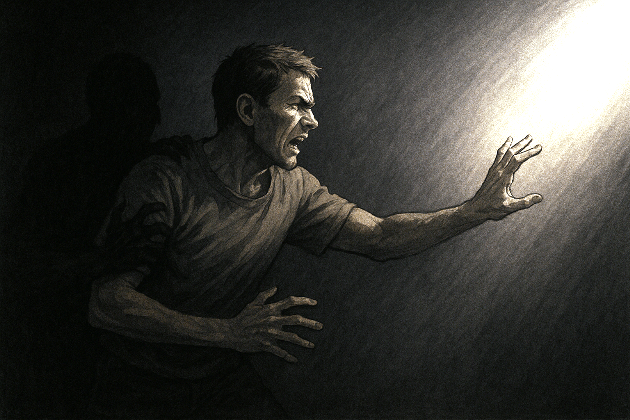
You know the right thing to do, but when the moment comes, it feels like climbing a mountain. Instead, you end up doing the very thing you promised yourself you wouldn’t do.
That struggle is not imaginary. It is the reality of sin within us. In a very real sense, every person carries what we could call a “sin factory” inside — a natural inclination to resist the good and to lean toward selfishness, pride, or pleasure.
St. Paul himself describes this inner battle vividly in Romans 7:19:
“For I do not do the good I want, but the evil I do not want is what I do.”
The struggle to do good is not proof that you are hopeless — it is proof that sin is real and that we desperately need God’s grace.
God’s Original Plan: A Relationship of Love
In the Book of Genesis, we get a beautiful glimpse of what God intended for humanity. God desired a relationship of deep intimacy with His creation. We read in Genesis 3:8 that God would come and walk with Adam and Eve “in the cool of the day.”
All throughout Scripture, this desire of God echoes like a heartbeat:
- He longs for us to walk with Him.
- He calls us back when we wander.
- Even when we sin against Him repeatedly, His desire is reconciliation.
Sin is not the final word. God’s love and His mercy are.
The Fall: How Sin Entered the Human Race
But something went wrong. Through the disobedience of Adam and Eve, the entire human race fell into the slavery of sin. That one choice distorted our nature. Instead of living in perfect harmony with God, others, and creation, we became wounded, broken, and bent inward.
This is why St. Paul cries out in Romans 7:24-25:
“Wretched man that I am! Who will deliver me from this body of death? Thanks be to God through Jesus Christ our Lord!”
Sin is not just the bad choices we make — it is also the condition we are born into. The Catechism calls this “original sin,” which leaves us inclined to sin (CCC 404-405).
The Witness of Scripture: The Depth of Sin
Sacred Scripture paints a sobering picture of the extent of sin in the human heart:
- Genesis 8:21 – “The imagination of man’s heart is evil from youth.”
- Jeremiah 17:9 – “The heart is deceitful above all things, and desperately corrupt; who can understand it?”
- Mark 7:20-23 – Jesus Himself teaches that sin comes from within: “From within, out of the heart of man, come evil thoughts, fornication, theft, murder, adultery, coveting, wickedness, deceit, licentiousness, envy, slander, pride, foolishness.”
The problem is not just the world “out there.” The sickness of sin lives within each of us.
What the Catechism Says About Sin
The Catechism of the Catholic Church (CCC 1846–1851) gives us a clear definition of sin:
- CCC 1849: “Sin is an offense against reason, truth, and right conscience; it is failure in genuine love for God and neighbor… It wounds the nature of man and injures human solidarity.”
- CCC 1850: “Sin is an offense against God: ‘Against you, you alone, have I sinned, and done that which is evil in your sight’ (Psalm 51:4).”
Sin is not just breaking a rule. It is breaking relationship — with God, with others, and even with ourselves.
The Danger of Denying Sin
To allow ourselves to be fooled into thinking sin does not exist is to say, in effect, that Jesus came for nothing.
1 John 1:8-10 makes this clear:
“If we say, ‘We have no sin,’ we deceive ourselves, and the truth is not in us. If we confess our sins, He is faithful and just, and will forgive our sins and cleanse us from all unrighteousness. If we say we have not sinned, we make Him a liar, and His word is not in us.”
If there is no sin, then there is no need for the Cross. No need for salvation. No need for Jesus. But the reality is the exact opposite: the very fact that Christ came, died, and rose again is proof that sin is real — and that His mercy is greater.
Good Yet Wounded: Why Jesus Came
Here is the paradox: man is good, but wounded. Created in God’s image, we remain fundamentally good. But we are born with a defect — the wound of original sin. That is why Christ came.
Jesus did not come merely to teach good morals. He came as the Savior of sinners, the one who, as the angel told Joseph, would “save His people from their sins” (Matthew 1:21).
The Hope of Mercy
Sin may be real, but God’s mercy is even more real. No matter where you’ve been, no matter what you’ve done, forgiveness is possible.
As St. Paul assures us in Romans 5:20:
“Where sin increased, grace abounded all the more.”
The Cross of Christ is the final word, not our failures. When we acknowledge our sins and run to Jesus, He cleanses, restores, and heals us.
Conclusion
To define sin is not to wallow in guilt — it is to name the sickness so that we can receive the cure. Sin is real, but it does not have the last word. Jesus Christ does.
This is why the Catechism tells us:
- CCC 1846: “The Gospel is the revelation in Jesus Christ of God’s mercy to sinners.”
When we finally admit our condition, when we confess our sins, we open ourselves to the One who alone can save us.
Closing Prayer
Lord Jesus, I acknowledge that I am a sinner in need of Your mercy.
Open my eyes to see the ways I resist Your love.
Heal the wound of sin within me, and teach me to walk in Your truth.
Thank You for dying on the Cross and rising again,
So that I may live in the freedom of Your grace.
Amen.